








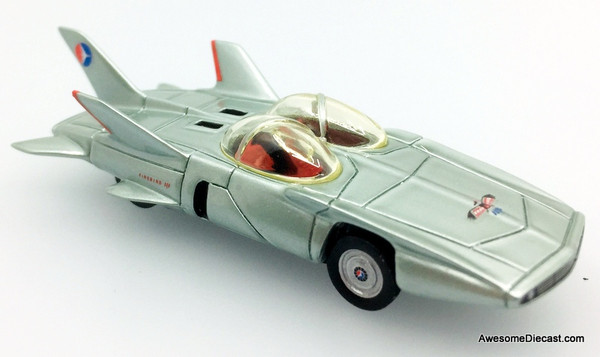
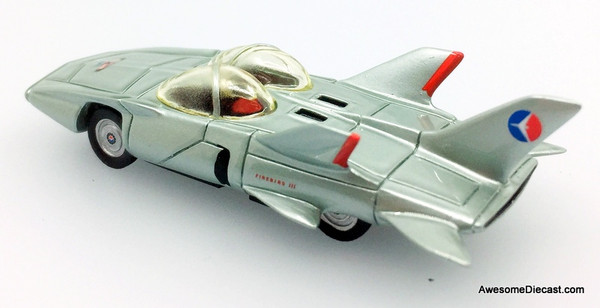
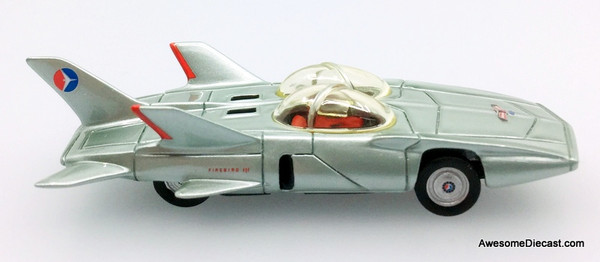
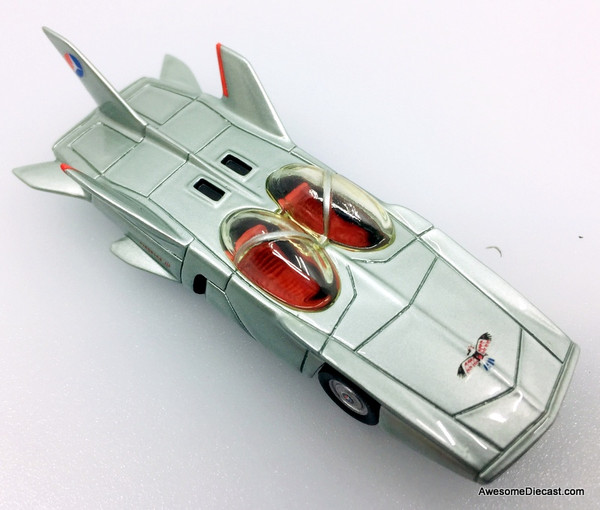


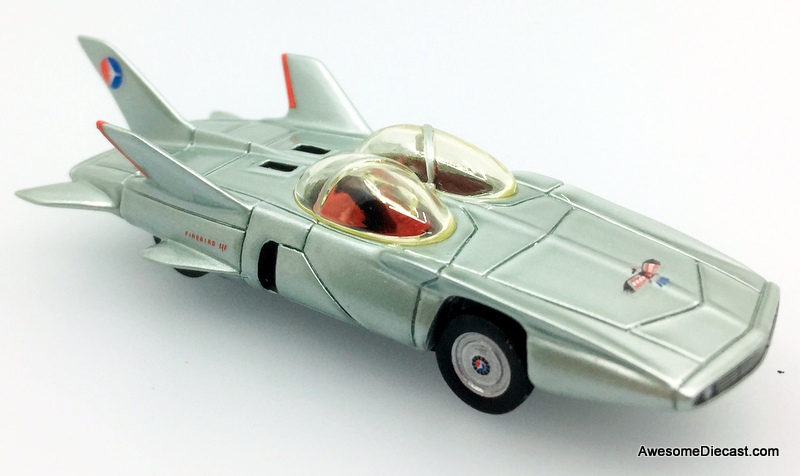
BoS 1:87 1959 GM Firebird III, Silver
$57.95
The General Motors Firebird comprises a quartet of prototype cars that General Motors (GM) engineered for the 1953, 1956, and 1959 Motorama auto shows. The cars' designers, headed by Harley Earl, took Earl's inspiration from the innovations in fighter aircraft design at the time. General Motors never intended the cars for production, but rather to showcase the extremes in technology and design that the company was able to achieve. The cars recently joined the display at the Henry Ford Museum in Dearborn, Michigan, and still make regular car show appearances. The tradition of offering prototype vehicles continued with the Pontiac Banshee series.
From 1967 to 2002, the Pontiac division of GM marketed its Firebird line of pony cars, that had no direct relation to these series of Firebird concept cars.
The Firebird III debuted at Motorama in 1959. The concept car featured a fiberglass body with seven short wings and tail fins. It is a two-seater powered by a 225 hp (168 kW) Whirlfire GT-305 gas turbine engine, with a two-cylinder 10 hp (7.5 kW) gasoline engine to run all the accessories. Its exterior design features a double-bubble canopy and included cruise control, anti-lock brakes, and air conditioning. It also featured air drag brakes similar to those found on aircraft that emerged from flat panels in the bodywork of the car to slow it from high speeds; an "ultra-sonic" key that signaled the doors to open; an automated guidance system to help avoid accidents; and a "no hold" steering system. The car's steering was controlled by the driver by a joystick positioned between the two seats.