







Corgi
Corgi 1:50 Leyland 4 Wheel Flatbed & Container Set
Diecast metal with plastic parts British Road Services series This is a limited of production of 6000 and has the certificate #668



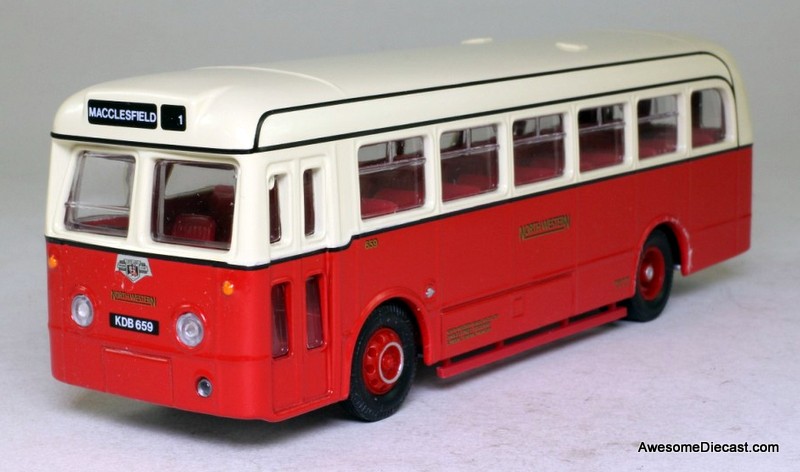
Diecast metal with plastic parts.
Limited edition 4,891 of 5,500.
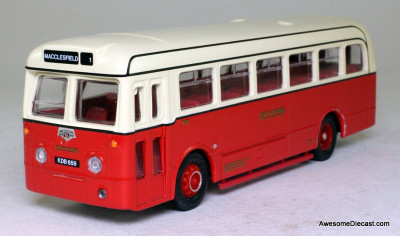
The Leyland Tiger Cub (coded as PSUC1) was a lightweight underfloor-engined chassis manufactured by Leyland between 1952 and 1970.
The Leyland Tiger Cub was launched in 1952. Most were built as 44-45 seat buses, with a smaller number as coaches. The standard bodied dimensions were 30 ft (9.1 m) long by 8 ft (2.4 m) wide, the UK maximum at launch in 1952.
It was named when a lighter-weight chassis was introduced in 1952 as a modification to the older Leyland Royal Tiger (type PSU1), which was regarded by certain influential customers, especially in the BET group of privately managed bus companies, as overweight, over-specified and too expensive, those who were operating it were also finding vacuum-servo versions under-braked.
The Tiger Cub was powered initially by a Leyland O350H 91bhp 5.76-litre diesel engine, a horizontal version of the engine fitted to the Comet 90. It had a newly designed lightweight high straight frame with a vertical radiator set just behind the front axle. The launch transmission was the same four-speed constant mesh unit which had been used in the Tiger PS1, Titan PD1 and their export equivalents.
There was a choice of either a single-speed or two-speed rear axle, both of spiral-bevel form and derived from the Comet 90 design, the latter using an electrically actuated Eaton driving head in a Leyland casing. Wheels were of the eight-stud type and diaphragm-type air braking was standard. This was the first time Leyland had offered a bus chassis without another braking option, whilst vacuum or vacuum-hydraulic brakes were still standard across most of the UK bus and coach industry.
Corgi
Diecast metal with plastic parts British Road Services series This is a limited of production of 6000 and has the certificate #668
