







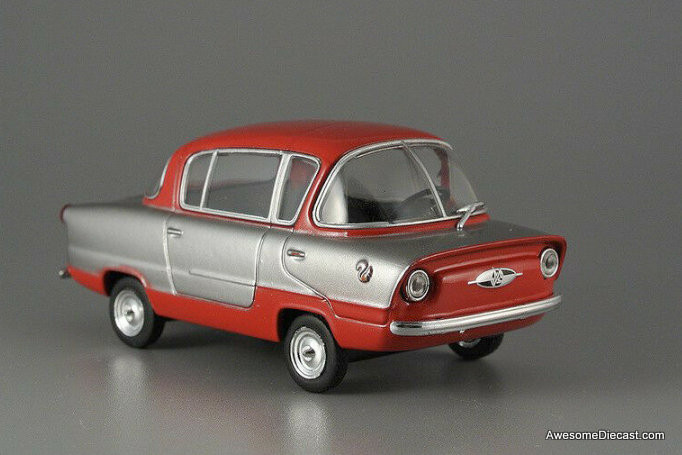
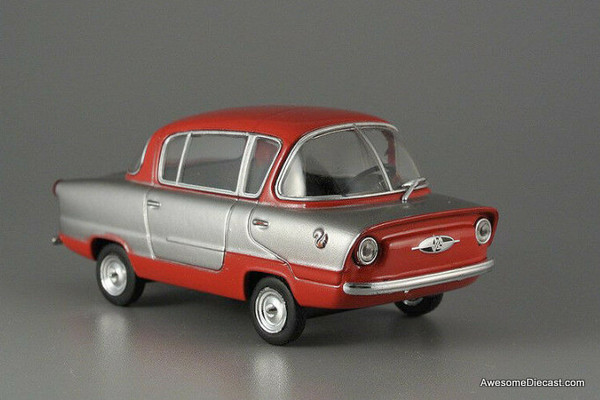
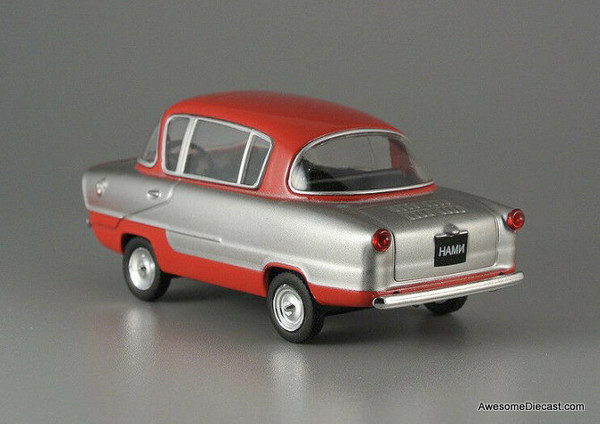

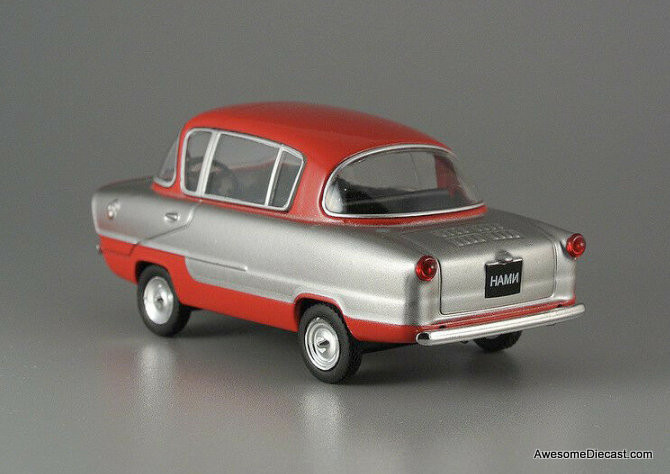


DeAgostini 1:43 1955 NAMI-A50 Belka Unique Soviet Prototype Car
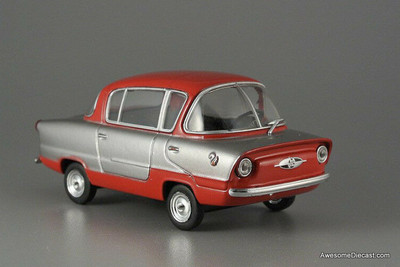
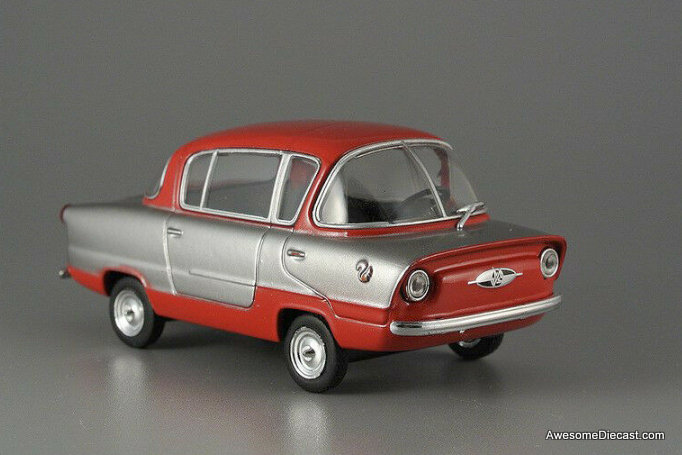
DeAgostini 1:43 1955 NAMI-A50 Belka Unique Soviet Prototype Car
$68.99
The Central Scientific Research Automobile and Automotive Engines Institute , abbreviated as NAMI in Russian Federation in the field of automotive industry development.
The research and development automobile and engine institute was established on 14 March 1920 on the basis of Scientific Automobile Laboratory (Russian: Научной автомобильной лаборатории (НАЛ)) of Scientific and Technical department of VSNKh. This laboratory was established on 16 October 1918. From 1924 the institute permitted purchases of foreign automobiles and automobile accessories. The first original automobile, the NAMI 1, had been developed by 1927 (the first car of the USSR).
During the 1930s the institute became the leading development department of the Soviet automotive industry. Following that year they developed and produced the first Soviet trolleybuses, created several tractor models and several lorry models. For the Red Army half-tracks and armored vehicles had also been actively developed.
From 1931 to 1946 the institute bore the name Automobile and Tractor Research Institution (Russian: Scientific Automotive Institute (NATI) ).
At the beginning of 1946, because the tractor industry was transferred to be under the supervision of the Ministry of Agricultural Machinery , NATI was split in two. The automobile branch was kept under supervision of the Ministry of Automobile Industry and was reorganized into Scientific and Research Automobile and Engine Institute (NAMI) (Russian: Scientific Research Automobile and Automotive Institute (NAMI) ). The tractor division was transferred under the supervision of the Ministry of Agricultural Machinery. This division served as a basis for the Union Tractor Research Institution (NATI) (Russian: Tractor Research Institute (NATI) ).
Multiple experimental and prototype engines were developed at the institute, many which served as basis for the mass production ones. In the 1960s the Institute developed some front-wheel drive and automatic transmissions which weren't put into production until much later, as these were deemed too expensive and complex for the current state of the industry, citing the example of a GAZ-21 automatic transmission, for which the service infrastructure was virtually non-existent.