





Greenlight
Greenlight 1:64 1954 Ford F-100 w/Drop In Tow Hook: Standard Oil Roadside Service
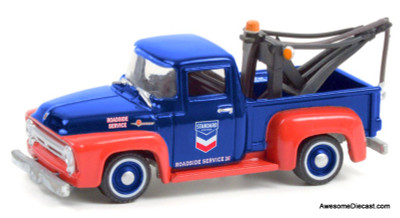
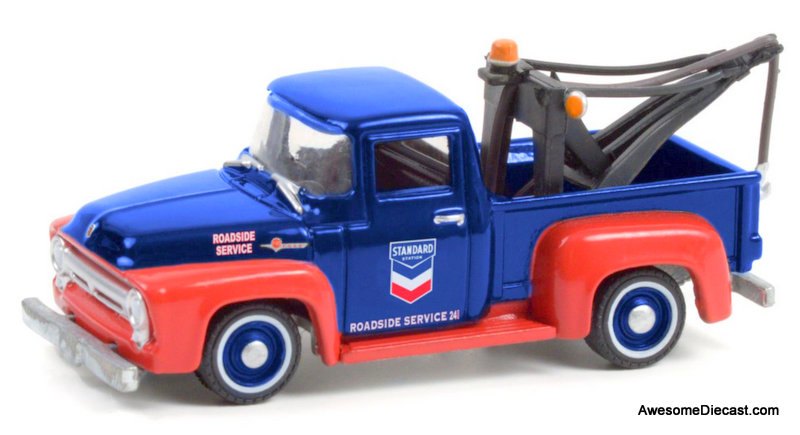
Greenlight 1:64 1954 Ford F-100 w/Drop In Tow Hook: Standard Oil Roadside Service
$175.86
The second generation of the Ford F-Series is a series of trucks that was produced by Ford from the 1953 to 1956 model years. In line with the previous generation, the F-Series encompassed a wide range of vehicles, ranging from light-duty pickup trucks to heavy-duty commercial vehicles. In place of the previous "Bonus-Built" series, Ford now marketed its truck range as the "Triple Economy" series.
To further emphasize the model update, Ford changed the F-Series model nomenclature from a single number to three numbers; subsequently, this system has remained in use on all Ford F-Series trucks to the present day.
Alongside the naming change, this generation marked several firsts for the F-Series, including an adjustable seat (wide enough for 3 people), power brakes, and the introduction of the Ford-O-Matic automatic transmission as an option. In line with Ford cars, seat belts were introduced as an option for 1956.
The second-generation F-Series was produced by Ford at eleven facilities across the United States; Ford Canada marketed the model line under both the F-Series and the Mercury M-Series nameplates. Ford of Brazil inaugurated local production with the model line, producing it from 1957 to 1962.
A tow truck (also called a wrecker, a breakdown truck, recovery vehicle or a breakdown lorry) is a truck used to move disabled, improperly parked, impounded, or otherwise indisposed motor vehicles. This may involve recovering a vehicle damaged in an accident, returning one to a drivable surface in a mishap or inclement weather, or towing or transporting one via flatbed to a repair shop or other location.
A tow truck is distinct from a car carrier trailer, which is used to move multiple new or used vehicles simultaneously in routine transport operations.