









Greenlight
Greenlight 1:64 1971 Dodge Charger Super Bee

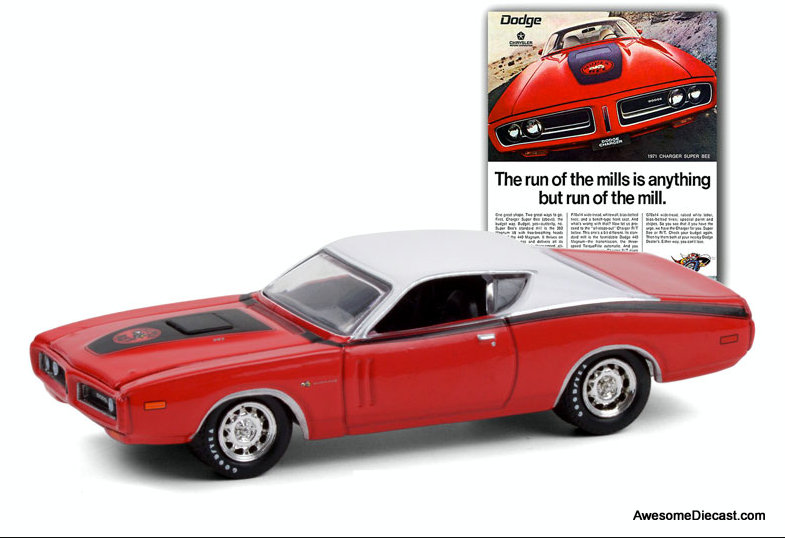
Greenlight 1:64 1971 Dodge Charger Super Bee
$181.20
The Dodge Super Bee is a muscle car marketed by Dodge, that was produced for the 1968 through 1971 model years.
The Super Bee model name was resurrected for the 2007, 2008, 2009, 2012, and 2013 Dodge Charger Super Bee models.
The original Dodge Super Bee was based on the Dodge Coronet two-door coupe, and was produced from 1968 until 1970. It was Dodge's low-priced muscle car and rebranded and mildly distinguished to the Plymouth Road Runner. The origin of the name, "Super Bee", has its basis in the "B" Body designation pertinent to Chrysler's mid-sized cars, including the Road Runner and Charger.
The Super Bee used a dash cluster from the Dodge Charger, while the 4-speed manual transmission cars received a Hurst Competition-Plus shifter with Hurst linkage; this shifter compared to the Road Runner's less expensive Inland shifter and linkage. Due to the higher-quality accessories attached to the Super Bee, the car was sold at a higher price in comparison to the Plymouth version and this had a negative effect on sales.
The Super Bee was available with the Hemi engine. This option raised the price by 33%, and only 125 were sold. The 1968 model was only sold as a two-door coupe, with two engine options, the base 335 hp (250 kW) 383 Magnum, and the 426 Hemi, rated at 425 hp (317 kW).
The Super Bee included a heavy-duty suspension, an optional Mopar A833 4-speed manual transmission, and high-performance tires. Outside, a stripe (with the bee logo) was wrapped around the tail.
A hardtop version joined the existing pillared coupe body in 1969 and a new optional twin-scooped air induction hood, the "Ramcharger", became available. This particular option was coded N96 and was the counterpart to the Plymouth Road Runner's "Coyote Duster" air induction hood. The "Ramcharger" hood featured forward-facing scoops.
For the 1970 model, the Super Bee received a redesign and a new front-end that consisted of a twin-looped front bumper that Dodge Public Relations referred to as "bumble bee wings". Sales fell for the year from 15,506 in 1970 to 5,054 in 1971—because of, or in spite of, this new look, with another sales pressure coming from higher insurance rates for performance cars; the similar Plymouth Road Runner and Plymouth Duster both experienced similar sales issues. In addition to the new looks, engine choices and "ramcharger" hood carried over from 1969, the 1970 cars from Dodge featured several new or improved options.For example, a "C- stripe" variant of the bumble stripe was offered, in addition to new high-back bucket seats, a steering column-mounted ignition and a "pistol grip" Hurst shifter on four-speed models.