







MiniGT
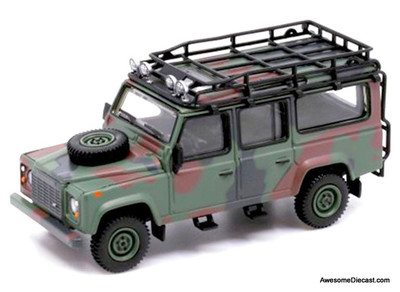
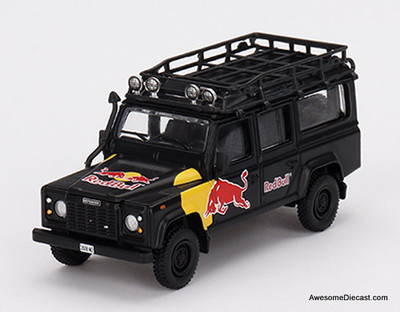
Land Rover Defender 110 Red Bull LUKA 2024 Red Bull Showrun (Taichung Exclusive) 1:64 Diecast Model Car by Mini GT
This is a rare hard to find model 2024 Red Bull Showrun Taichung Exclusive



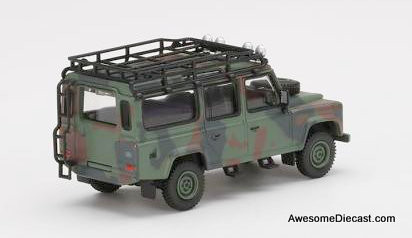
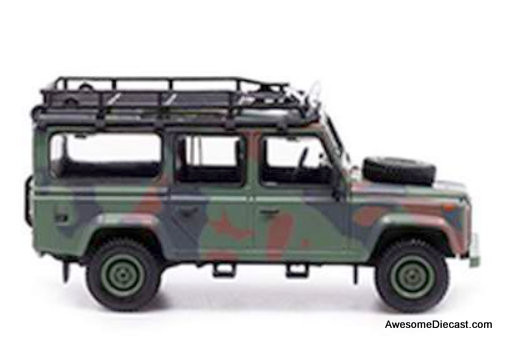
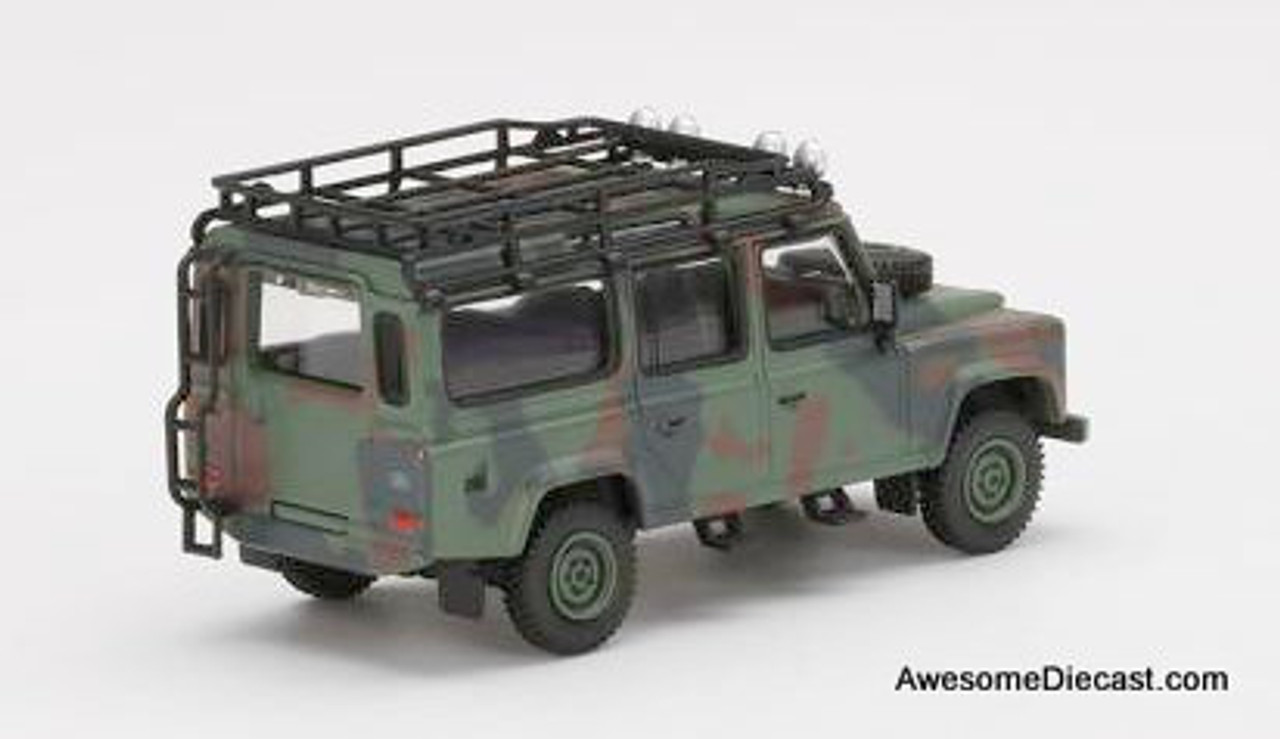


The Land Rover Defender (initially introduced as the Land Rover 110 / One Ten, and in 1984 joined by the Land Rover 90 / Ninety, plus the new, extra-length Land Rover 127 in 1985) is a series of British off-road cars and pick-up trucks. They consistently have four-wheel drive, and were developed in the 1980s from the original Land Rover series which was launched at the Amsterdam Motor Show in April 1948. Following the 1989 introduction of the Land Rover Discovery, the term 'Land Rover' became the name of a broader marque, and thus no longer worked as the name of a specific model; thus in 1990 Land Rover renamed the 90 and 110 as Defender 90 and Defender 110 respectively. The 127 became the Defender 130.
The vehicle, a British equivalent of the Second World War derived (Willys) Jeep, gained a worldwide reputation for ruggedness and versatility. Using a steel ladder chassis and an aluminium alloy bodywork, the Land Rover originally used detuned versions of Rover engines. The original Defender is still being produced in developing countries despite the arrival of the Land Rover Defender (L663).
Though the Defender was not a new generation design, it incorporated significant changes, compared to the series Land Rovers, such as adopting coil springs front and rear, as opposed to all leaf springs on the previous; except for retaining rear leaf springs on high capacity (payload) models. Coil springs offered both better ride quality and improved axle articulation. Adding a lockable centre differential to the transfer case, gave the defender permanent (on-road) four-wheel-drive capability. Both changes derived from the Range Rover. Interiors were modernised too.
Externally, a full-length bonnet and full-width integrated grille and headlights, combined with (finally) a single-piece windscreen, plus widened wheel arches that covered new, wider-track axles were the most noticeable changes. Initially the engineering department conserved a part-time 4WD system, like on previous models, but it failed to sell any longer, and this option was immediately dropped in 1984. While the engine was carried over from the Series III, a new series of modern and more powerful engines was progressively introduced.
MiniGT
This is a rare hard to find model 2024 Red Bull Showrun Taichung Exclusive